Intelligent 3D Visualization Sector

A-I-DESIGN’s AI Studio module is dedicated entirely to AI-powered image creation. It allows users to easily use personal images as a starting point or to have the AI generate new images based on specific user-defined criteria.
In moments, it becomes possible to produce visuals, variations, and presentations that would otherwise require days of work using traditional image editing or graphic design software.
Examples of images of a fighter of the future
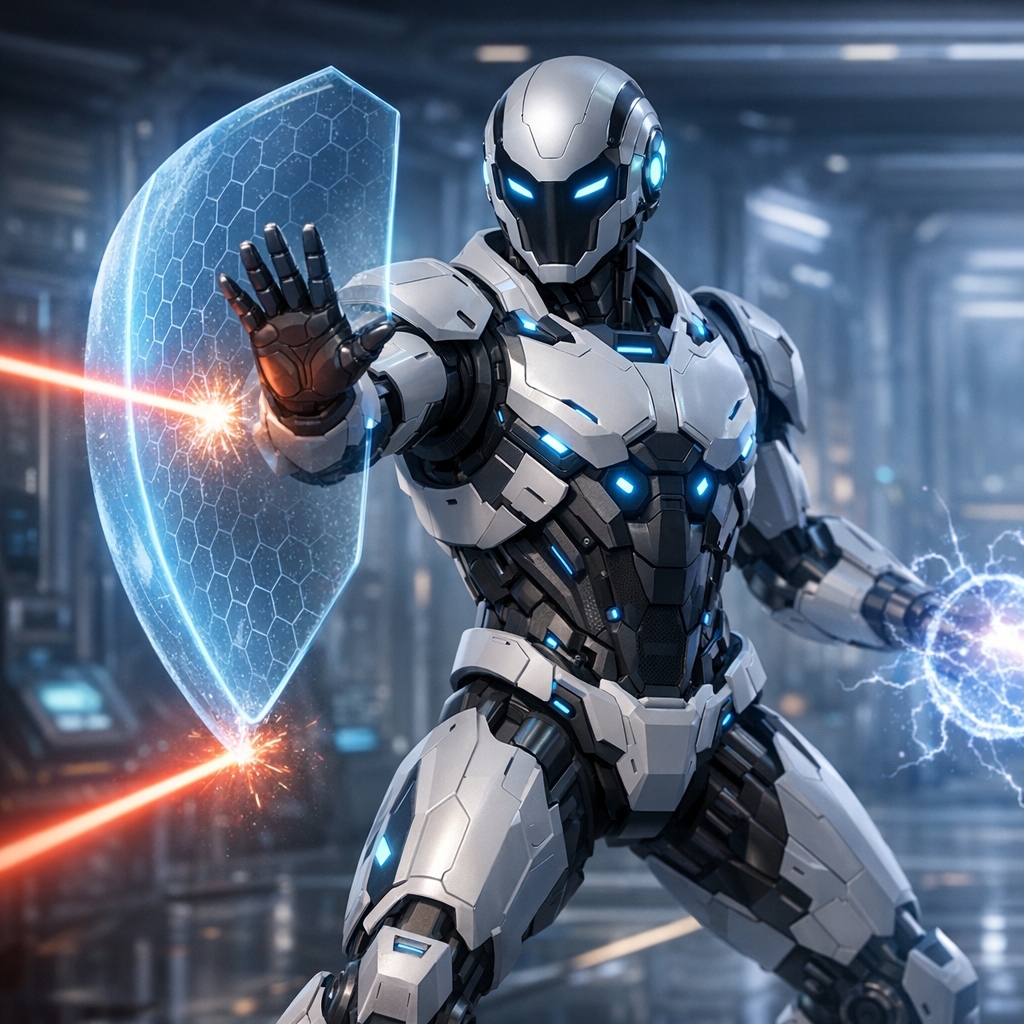
The use of artificial intelligence to create futuristic warrior images relies on a combination of human creativity and algorithmic power. It all begins with defining a clear concept: the type of warrior, the projected era, the visual universe, the integrated technologies, the overall atmosphere, and the emotions to be conveyed. This planning phase is essential because AI doesn't create "at random": it interprets precise instructions, called prompts, written in natural language but strategically structured.
The image creation then relies on visual generators based on diffusion models. The user describes the warrior in great detail: futuristic armor, high-tech materials, energy weapons, posture, morphology, artistic style, color palette, and even the environment (cyberpunk city, distant planet, technological battlefield). The richer and more coherent the description, the higher the quality and more unique the final rendering becomes. Additional parameters allow for fine-tuning the style, realism, lighting, and depth of field.
The AI then analyzes millions of visual references learned during its training to generate an original image that matches the instructions. Several iterations are often necessary: the user adjusts the prompt, corrects certain elements, or enhances details to obtain a result that faithfully reflects their vision. AI thus becomes a co-creation tool, capable of accelerating the artistic process while still allowing ample room for human input.
Finally, the generated images can be reworked, enhanced, or integrated into larger projects such as video games, narrative universes, book covers, or communication materials, making AI a true driver of contemporary visual creation.
Using artificial intelligence to imagine a futuristic military conflict opens up new creative perspectives at the crossroads of anticipation, science fiction, and strategic analysis. AI primarily functions as a tool for visual and narrative projection, capable of materializing hypotheses about the evolution of technologies, tactics, and power dynamics. By relying on precise descriptions, it allows for the creation of plausible or deliberately speculative scenarios, without any predictive claims, but with strong visual coherence.
In the context of image creation, AI is used based on detailed prompts describing the conflict environment, the factions involved, military equipment, infrastructure, and the overall atmosphere. Autonomous drones, augmented soldiers, hybrid vehicles, hyper-connected cities, or areas devastated by advanced technologies can thus be represented with a high level of detail. The user fine-tunes the parameters to adjust realism, dramatic tension, lighting, and even futuristic aesthetics, allowing for the exploration of different perspectives on the same conflict.
Beyond the visuals, AI also serves as a tool for constructing a narrative universe. It helps structure the stakes of the conflict, imagine emerging military doctrines, and explore human and societal consequences. This approach is particularly prevalent in the fields of video games, film, concept art, and creative communication.
Thus, AI does not replace human thought but acts as an accelerator of imagination. It provides a visual and conceptual framework for exploring futuristic conflicts in a creative, controlled, and responsible manner, while leaving humans at the heart of the interpretation and meaning given to these representations.
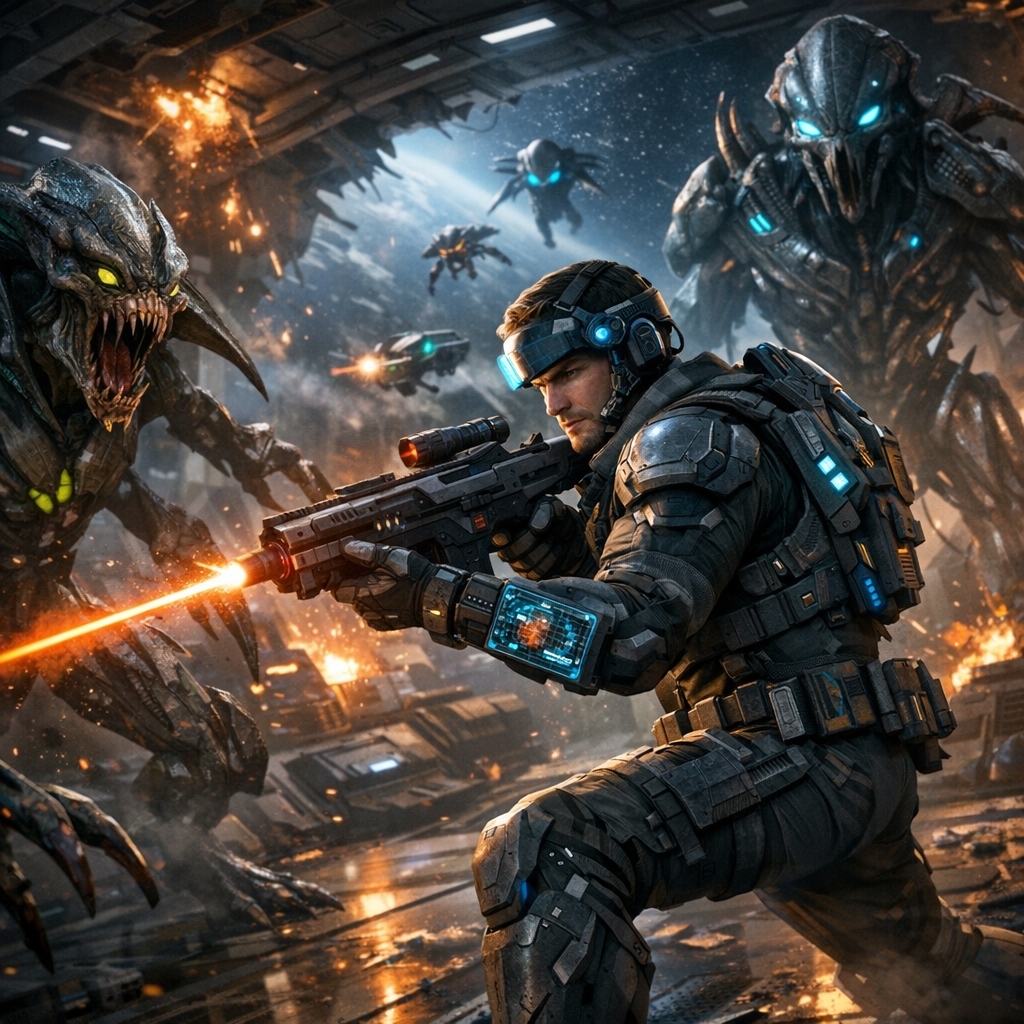
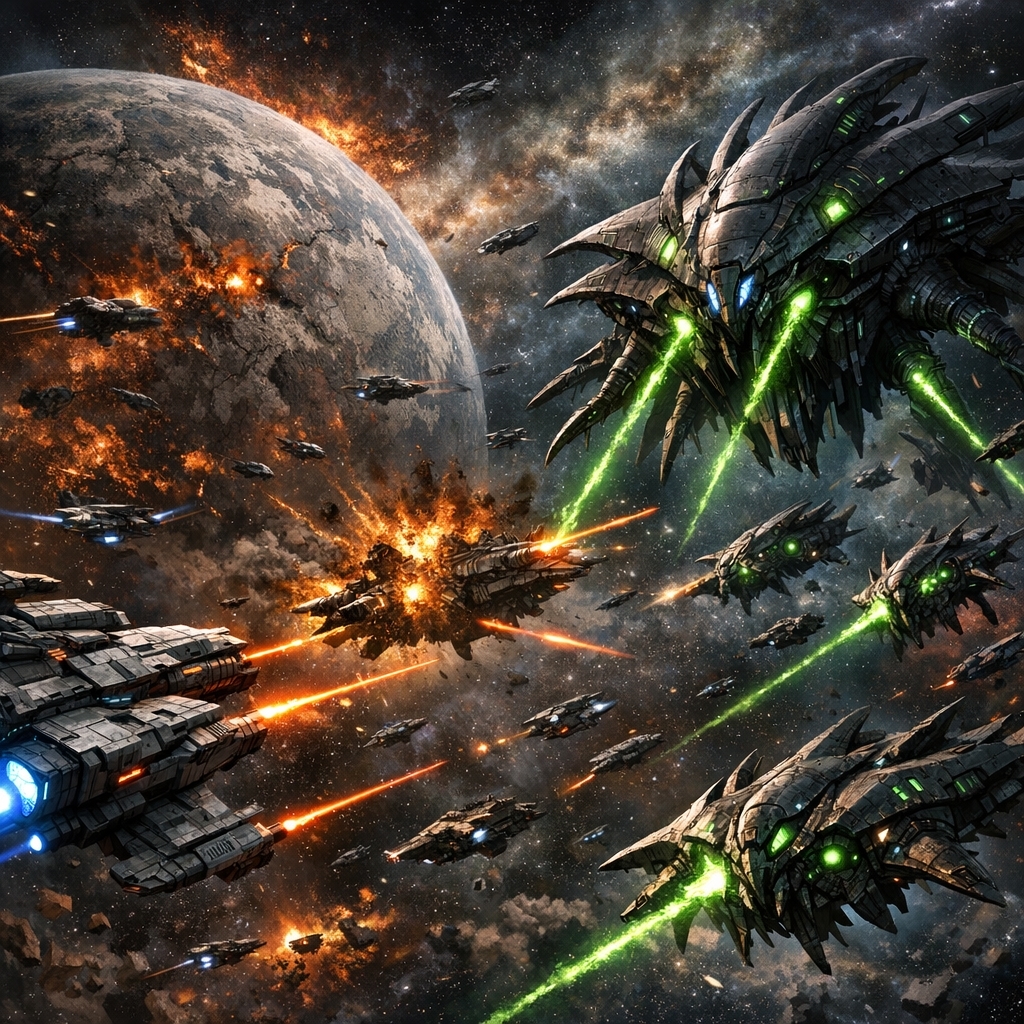
The battle erupts at the edge of a ruined star system, where the debris of ancient orbital stations drifts like metallic ghosts. In the absolute silence of space, only the internal vibrations of the ships betray the intensity of the confrontation. Human forces advance in a fragmented formation, protected by bluish distortion fields, while their interstellar fighters unleash swarms of autonomous drones tasked with reconnaissance and jamming.
Suddenly, the alien fleet reveals itself. Organic and unsettling, it seems alive, as if each ship were a sentient being. Their iridescent hulls flex and unfold, partially absorbing human energy blasts. Biological plasma weapons slice through space, leaving behind unstable, luminous trails capable of disintegrating a shield in seconds. The battle descends into chaos, each side adapting its tactics in real time thanks to combat artificial intelligences.
At the heart of the confrontation, assault units are launched from the ships. Equipped with magnetic exoskeleton armor, the human soldiers face off against alien warriors in close-quarters combat around a strategic asteroid. The aliens move with supernatural agility, using pulsating energy blades and psychic abilities to disorient the enemy. Communications are disrupted, and the line between technology and instinct blurs.
As the system's star enters a phase of instability, the battlefield becomes a race against time. Every decision could lead to total annihilation. This futuristic space battle is not just a fight for survival, but a clash between two visions of the universe, where human ingenuity confronts a radically alien extraterrestrial intelligence.