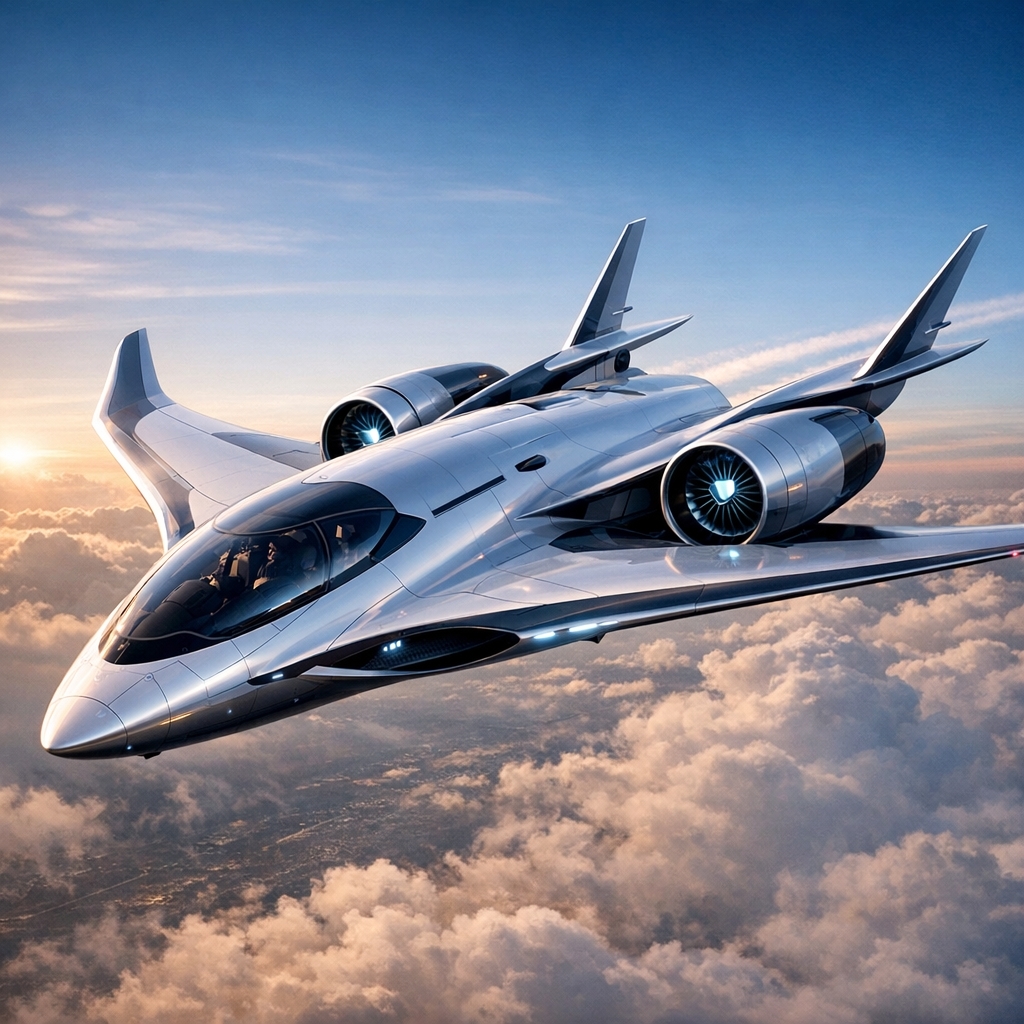
Futuristic transport project
Example of air transport
The Future of Air Transport: From Verticality to Hydrogen
The aviation sector is undergoing a major transformation in response to environmental pressures. The kerosene-powered aircraft is in its final decades, gradually being replaced by cleaner planes. Electric aircraft are becoming the standard for short-haul flights (less than 500 km), with projects like Alice (Eviation) and the Pipistrel Velis. For long-haul flights, hydrogen is being actively explored, notably by Airbus, which plans to have zero-emission aircraft by 2035.
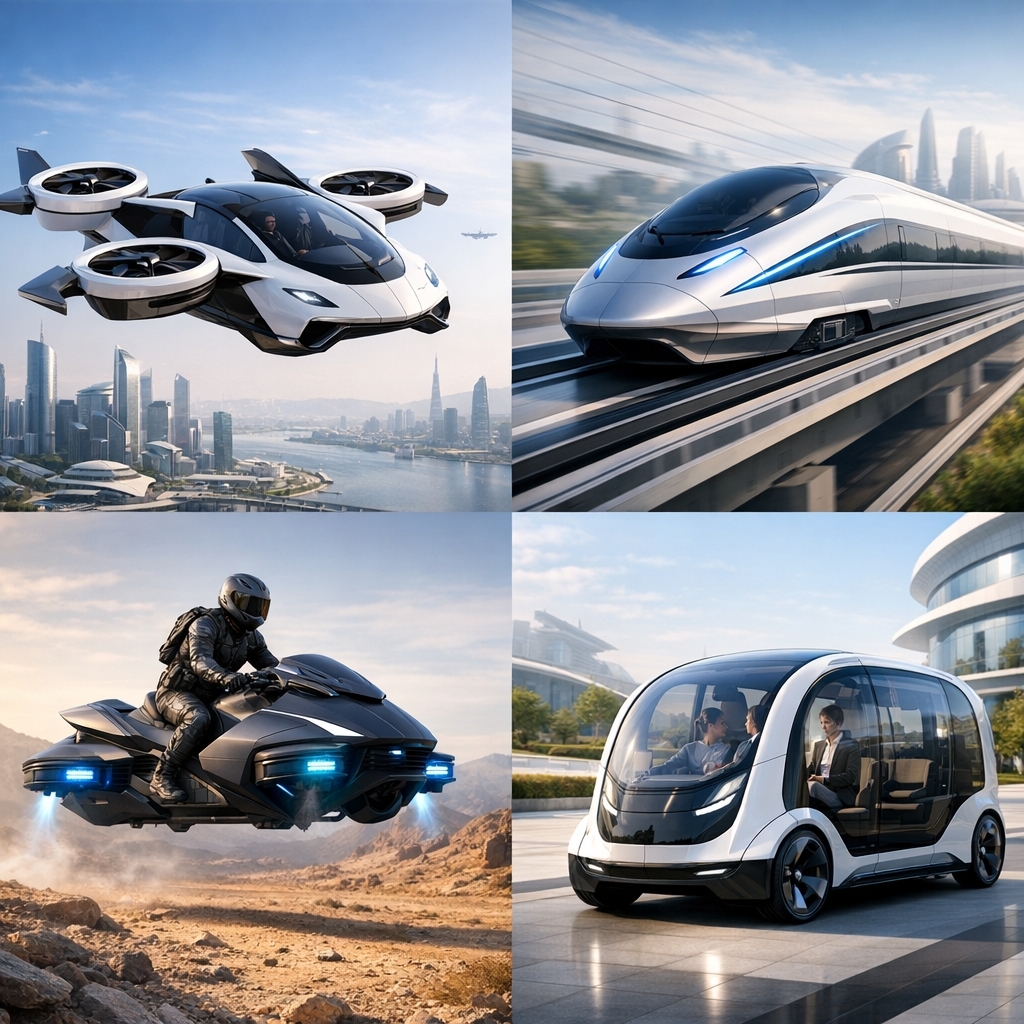
Another revolutionary area is the development of urban flying vehicles. eVTOLs (electric vertical takeoff and landing vehicles) aim to alleviate urban congestion by taking to the skies. Numerous startups, such as Volocopter, Lilium, and Joby Aviation, are developing flying taxis for 2030, designed to operate on short intra-urban routes. These silent and autonomous aircraft require the development of vertiports, a new type of urban infrastructure.
An Interconnected and Sustainable Future
Whether by land or air, the transportation of the future is part of a green, connected, and multimodal mobility model. Artificial intelligence will play a central role in managing traffic flow, ensuring safety, and optimizing routes. The major challenge, however, remains social acceptance, regulation, and the adaptation of infrastructure to these emerging technologies.
The coming years will see the realization of innovations long considered futuristic, with the ambition of reconciling speed, safety, accessibility, and sustainability in all modes of transportation.
Land transport model
The Future of Ground Transportation: Towards Smart, Decarbonized Mobility
The ground transportation revolution is unfolding around several key areas: electrification, autonomy, connectivity, and intermodality. Electric vehicles are gradually becoming the norm, driven by policies aimed at reducing CO₂ emissions. But the real technological leap will come with autonomous vehicles, capable of operating without human intervention thanks to artificial intelligence, LiDAR sensors, and 5G. Companies like Tesla, Waymo, and Apple are working on these solutions.
Meanwhile, very high-speed trains (such as the next generation of TGVs or the Hyperloop) promise to connect major cities at speeds exceeding 1,000 km/h, in low-pressure tubes. These innovations, still in the testing phase, could redefine continental distances. In urban areas, automated metros, self-driving electric buses, and smart shared lanes are booming. The infrastructure is also evolving, with solar roads, ultra-fast charging stations and digital platforms for optimizing flows.
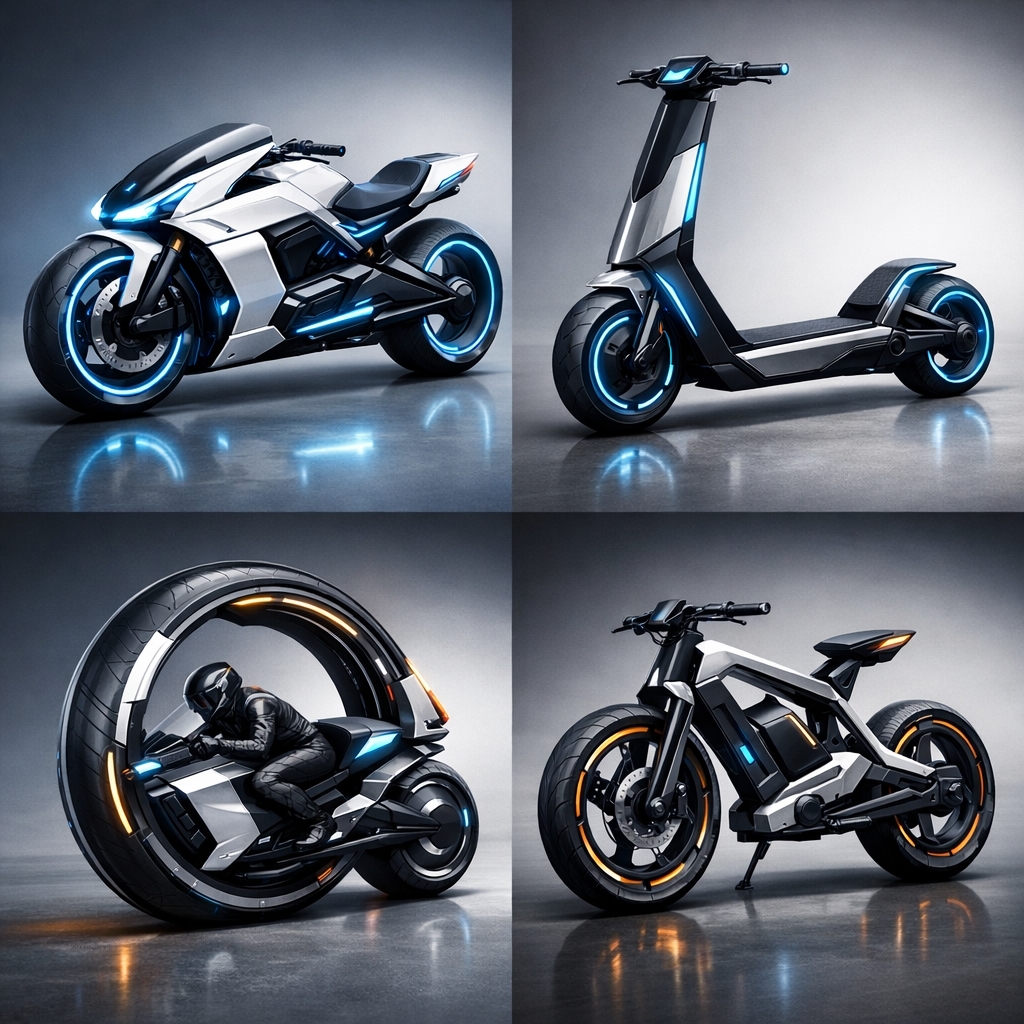
An Interconnected and Sustainable Future
Whether by land or air, the transportation of the future is part of a green, connected, and multimodal mobility model. Artificial intelligence will play a central role in managing traffic flow, ensuring safety, and optimizing routes. The major challenge, however, remains social acceptance, regulation, and the adaptation of infrastructure to these emerging technologies.
The coming years will see the realization of innovations long considered futuristic, with the ambition of reconciling speed, safety, accessibility, and sustainability in all modes of transportation.
Future airplane model
A redesigned aircraft for efficiency and aerodynamics
The aircraft of the future will first and foremost be distinguished by its innovative architecture. Traditional shapes will give way to more aerodynamic concepts such as the blended wing body, where the fuselage and wings merge to reduce drag and fuel consumption. This design, explored by Airbus and NASA, allows for more passengers while reducing noise and emissions.
The materials used will be ultra-lightweight and strong, often derived from nanotechnology or additive manufacturing (3D printing), enabling simplified maintenance and improved durability.